 1E
1E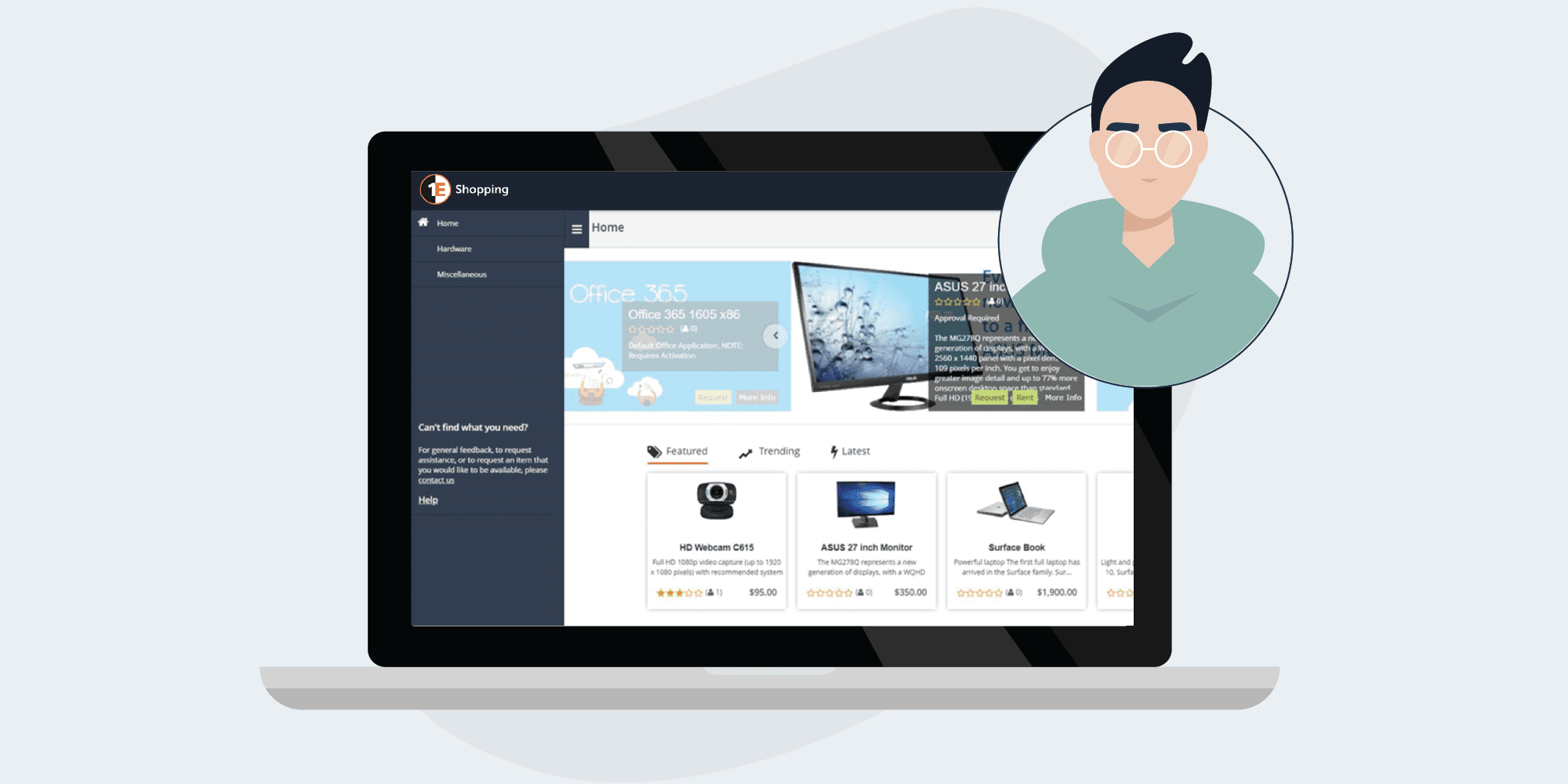
Inside Track marks the debut of a new blog series featuring conversations with industry experts about emerging trends, global developments, and product announcements. This inaugural piece brings together Founder and CEO Sumir Karayi, VP of Product Rob Peterscheck, and Product Manager Paul Thomsen to explore the evolution of self-service portals, employee empowerment in distributed work environments, and the capabilities of 1E Shopping 6.0 within work-from-anywhere enterprises.
Why are self-service portals relevant right now?
Rob Peterscheck: "Anything that can be done without going to a service desk means more time to deal with the crisis." Self-service has historically driven down costs and redirected effort; COVID amplifies this importance for enterprise IT teams managing unprecedented demands.
Paul Thomsen: Beyond intensified IT pressures from pandemic response, work patterns have fundamentally shifted. Employees balance professional responsibilities with home life, resulting in extended work hours. Enabling round-the-clock IT requests without burdening support teams represents a win for both employee experience and departmental efficiency.
Sumir Karayi: Modern workers expect support aligned with their schedules across any timezone. Self-service portals function as IT's storefront—comparable to how retail evolved from physical stores to digital platforms like Amazon. Current research indicates "only half of employees think the service desk is the fastest way to get an issue fixed," underscoring portal relevance.
What's the most interesting use case for self-service?
Sumir Karayi: Organizations increasingly demand unified portal experiences. "Nothing is simpler than one employee portal for Microsoft Intune, SCCM, ServiceNow, Active Directory and 1E real-time capabilities."
Paul Thomsen: Enterprise clients operate at massive scale—some process "7,000 user requests per week" through Shopping. Manual helpdesk handling at this volume would require substantial staffing; automated self-service allows IT to concentrate resources on complex infrastructure challenges rather than routine requests.
Rob Peterscheck: A notable implementation involved leveraging self-service Shopping to manage vendor training day allocations that renewed annually, demonstrating creative enterprise applications beyond standard use cases.
What does the future hold for Shopping?
Paul Thomsen: The vision centers on comprehensive, integrated shopping. Employees want "a trusted location where they can simply ask for anything required to do their job" without understanding backend processes. IT requires sophisticated workflows ensuring accountability and flexibility. Shopping previously integrated ConfigMgr, Active Directory, and general requests. Recent additions—ServiceNow, BigFix, Microsoft Store for Business, and Tachyon—expanded capabilities. Shopping 6.0's Intune integration now encompasses modern management approaches, with additional vendor ecosystem connections expected.
Rob Peterscheck: Shopping operates as a unified hub and integration platform. It should serve as "the employee interface for all of our products wherever they meet the end user," with deepening vendor ecosystem connections benefiting the platform, partners, and customers.
Sumir Karayi: IT must deliver services employees actively want to use, supporting productivity and engagement. This requires substantial automation investment. "1E is constantly investing in automation and we have the first real-time platform to build, test and deploy automated solutions."