 Category Leaders
 Hack The Box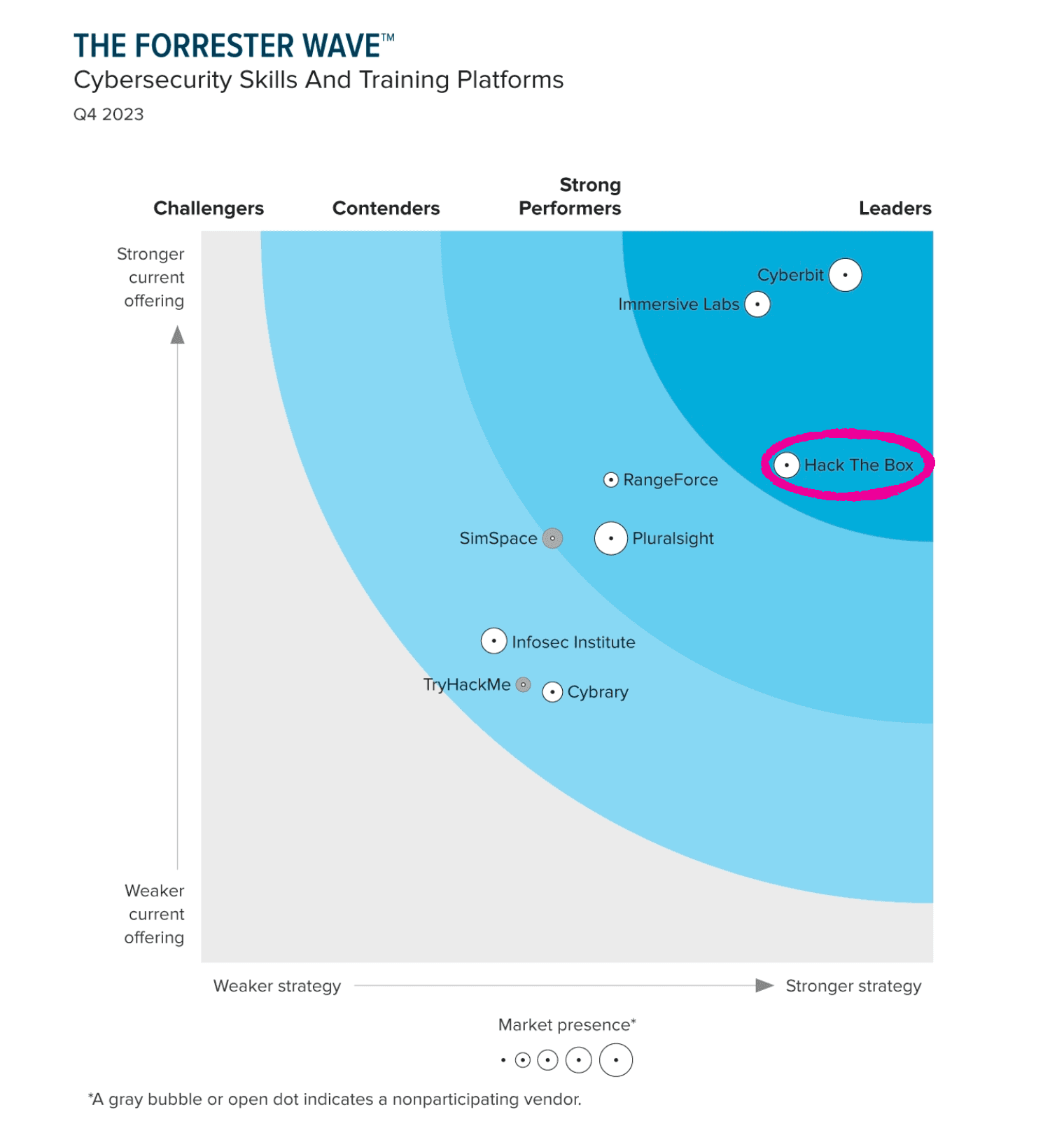
Today Hack The Box has been recognised as a Leader in The Forrester Wave™: Cybersecurity Skills and Training Platforms, Q4 2023, and it's a seriously huge achievement. Not because they didn't deserve it, but because they'd had zero interactions with Forrester or done much in the way of engaging with the Analyst community.
Category Leaders (which is a grand way of saying "I") had the privilege of supporting the Hack the Box team through the evaluation, briefing and appeal process.
Substance over slideware
Results like this are satisfying proof points for growing companies for a simple reason: they reward substance. People like me can sharpen the story. You can organise the evidence. But you cannot bluff your way into the Leaders segment on charm and slideware alone.
That is what makes this result interesting. Category creation is not inventing a phrase and hoping the market repeats it. It is a long process of being part of the discussion around the framing and criteria by which buyers understand a market. Category leadership is what happens when the market starts to use your map (or adopt key concepts from it).
That’s what Hack The Box has been doing.
It has helped pull cybersecurity training away from the old model of static courses, exam acronyms and completion metrics, and at the time, something super disruptive: It started with a building a community of hackers and challenging them to literally "Hack the Box". Over time this grew into gamified community competitions and a vast content library of real-world cybersecurity labs, challenges and skill building lessons. Next came the enterprise phase as HTB built built out a new platform taking all these principles and content to large organizations struggling with upskilling and benchmarking their Cyber teams.
Where did HTB shine?
That shift shows up clearly in the areas where Hack The Box really shines.
Strategy: Hack the Box did a really compelling job of articulating a vision for the future and Forrester highlighted its differentiated vision. HTB was also praised for it's "straightforward pricing"; Commercial clarity does not make for glamorous marketing, but they do make adoption much easier.
Community: The community is not bolted onto the side of the product as decoration. It is part of the engine. Community feedback and validation has steered the content strategy from day one.
Gamification: The learner experience is genuinely engaging, which matters more than some people still like to admit. In cyber training, engagement is not fluff. If people don’t come back, they don’t improve.What does that mean in practice: Gamified content, personalised learning paths, badges and certifications, team benchmarking (presented as competitive group games - Capture the Flag)
Hands On Learning: Just as importantly, the platform is built around doing, not merely knowing. Personalised paths, practical labs, capture-the-flag exercises, benchmarking and verifiable credentials turn training into evidence. That matters for learners, for teams, and for employers trying to separate real capability from acronym soup.
Content is King: The weekly cadence of content and the cloud-specific labs matter too, because cybersecurity operates on the basis of a threat landscape that evolves daily and new technologies and techniques to stay on top of. Relevance is part of the product.
This is what real category leadership looks like: not a slogan, not a stunt, but a company clear enough in its vision, product and execution that the market has to redraw the map.
Huge congratulations to Haris and the whole team
Now the real work begins - The category exists, now to help shape it and grow as a Category Leader.